Renters Insurance Cost in 2025: Coverage Basics and Ways to Save
Renters insurance is one of the most confusing line items for new renters. You are told to buy it, but the price, coverage, and proof requirements are rarely explained clearly. That leads to overpaying or buying coverage that does not match your situation.
This guide is general information, not insurance or legal advice. It will help you understand what renters insurance covers, how pricing works, and how to choose a policy that fits your budget.
Key takeaways
- Renters insurance covers personal property, liability, and temporary living costs.
- Your premium depends on coverage limits, deductible, and location.
- A home inventory makes coverage decisions easier.
- You can often save by bundling or adjusting deductibles.
- Keep proof of coverage ready for your landlord.
What renters insurance covers
Most policies include three core areas. Knowing these helps you decide how much coverage you need.
Personal property
This covers your belongings if they are stolen or damaged by covered events. Think furniture, electronics, and clothing.
Liability protection
Liability coverage can help if someone is injured in your unit and you are found responsible.
Loss of use
If a covered event makes your unit unlivable, this can help pay for temporary housing and related costs.
Roommates and shared items
Roommates are not always covered under one policy. If you share a unit, confirm whether each person needs their own policy and how shared items are handled.
What is not covered varies by policy. Read the exclusions section and ask questions before you buy.
Printable Checklist: Renters Insurance Prep
Before you shop
- Ask your landlord for the required coverage limits
- Decide who will be named on the policy
- Confirm any pet or liability requirements
Build a quick home inventory
- List your top 10 most expensive items
- Estimate total value of furniture and electronics
- Save photos or receipts in a folder
When you compare quotes
- Compare deductible levels
- Check exclusions for the risks you care about
- Confirm how to submit proof of coverage
Tip: Save this page or screenshot this checklist for later.
What affects renters insurance cost
Renters insurance prices vary because risk factors vary. Focus on the inputs you can control.
Coverage limits
Higher limits usually mean higher premiums. A small change to limits can noticeably change your price.
Deductible size
A higher deductible often lowers your premium. Pick a deductible you could actually pay if you had to file a claim.
Location and building type
Some areas have higher risk for theft, storms, or other claims. Building security features can also influence price.
If your building has controlled access, deadbolts, or security cameras, ask whether it lowers the premium. Some insurers apply discounts only if you request them.
Your insurance profile
Some insurers consider credit-based insurance scores or prior claims. Policies and rules vary by state.
If you are tracking total housing costs, pair this with the hidden rental fees guide so your budget stays realistic.
How claims and deductibles work
Knowing how claims work helps you choose a deductible and avoid surprises.
What a deductible actually means
The deductible is what you pay before insurance covers the rest. If your deductible is high, your monthly premium may be lower, but you need to be able to cover that amount if a claim happens.
How claims are paid
Claims often start with documentation and a list of damaged or stolen items. The insurer reviews the claim and applies your deductible to the covered total.
Pro tip: Save photos of your most valuable items and store them in a cloud folder. It makes claims faster and reduces back-and-forth.
When to file vs pay out of pocket
If the loss is small and close to your deductible, it may not make sense to file a claim. Use the inventory you built to decide.
How to choose coverage limits
The easiest way to pick limits is to build a simple home inventory. You do not need to list every item, just the big categories.
Quick inventory method
- Bedroom: bed, mattress, and electronics
- Living room: couch, TV, desk, and decor
- Kitchen: cookware and small appliances
- Bathroom: toiletries and towels
Take quick photos of each room as you list items. Photos are often easier than writing every detail. Keep receipts when possible.
If you are a first-time renter, the first apartment checklist can help you estimate what you own.
Decide what would be hardest to replace
If replacing your laptop or work gear would be a major financial hit, make sure your policy can cover it.
Example coverage math
Example: If your bedroom, living room, and electronics total around $12,000 and your kitchen and bathroom items add $3,000, a $15,000 to $20,000 personal property limit might make sense. Your actual number depends on your inventory.
Keep your budget in view
Use the Rent Budget Checker to make sure your premium fits your overall monthly costs.
Optional add-ons and upgrades
Some policies offer upgrades that can be helpful depending on your situation.
Replacement cost vs actual cash value
Replacement cost coverage can be more expensive but may pay more if you file a claim. Actual cash value takes depreciation into account.
High-value items
If you have jewelry, collectibles, or expensive electronics, you may need a special endorsement.
Water backup coverage
Some policies offer extra coverage for water backups or leaks. Ask for the details and exclusions.
Identity theft or extra protection
Some insurers offer add-ons for identity theft or electronics. These may be optional, so only add them if they fit your needs.
How to save on renters insurance
You can lower your premium without sacrificing essential coverage.
Compare quotes once a year
Rates change. A quick annual comparison can reveal a better price for the same coverage. If you use a comparison tool, disclosure: We may earn a commission if you use this service (at no cost to you).
Make sure you compare the same limits and deductibles so the prices are truly comparable.
Bundle with auto insurance
Bundling can reduce cost, but only if the total premium still fits your budget. Compare the combined price to separate policies.
Adjust the deductible
Raising the deductible can lower your premium. Make sure the deductible is still manageable in an emergency.
For more monthly savings ideas, review how to save money renting. Review your policy every year.
Ask about safety discounts
Some insurers offer discounts for alarms, deadbolts, or other security features. Ask before you buy.
Common mistakes to avoid
These issues show up often for first-time renters.
Skipping the home inventory
Without an inventory, it is easy to underinsure. A quick list of categories is enough to start.
Forgetting roommates or guests
Most policies cover only the named insured. If you have roommates, confirm whether they need their own policy.
Choosing a deductible you cannot cover
A lower premium is not helpful if the deductible is too high to pay in an emergency. Choose a number you could realistically pay.
How to buy and prove coverage
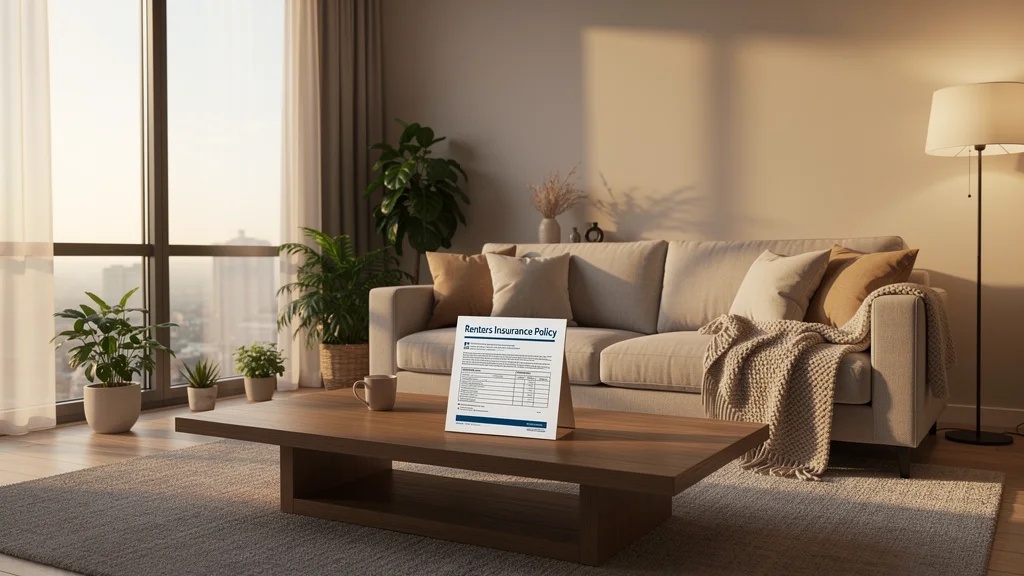
Landlords often require proof of coverage before you get the keys. Keep the paperwork ready.
What proof usually looks like
Most insurers provide a declaration page or certificate of insurance. Confirm what your landlord expects.
Keep proof organized
Save the proof PDF in the same folder as your lease and move-in photos. If your landlord asks for an update, you can respond quickly.
When to update your policy
Update your policy if you buy expensive items, move to a new unit, or add a roommate. A quick update keeps coverage aligned with your actual risk.
If you are still in the application stage, the rental application checklist can help you plan timing.
Copy/Paste Template: Coverage Confirmation Request
When to use this: When you need a written record of coverage requirements.
Subject: Confirming Renters Insurance Requirements for [Address]

Hi [Landlord Name],

I am setting up renters insurance and want to confirm the required coverage limits for [Address].

Could you please confirm:
- Required liability coverage amount
- Whether additional insured wording is needed
- Where to send proof of coverage

Thank you,
[Your Name]
Make it yours: Send this before you buy so you do not have to revise the policy later.
2-Minute Quiz: Are You Ready to Choose a Policy?
- You know your coverage limits...
- A) Not yet
- B) Roughly
- C) Yes, with a simple inventory list
- Your deductible choice is...
- A) Whatever the default is
- B) Something lower for peace of mind
- C) Based on what you could pay if needed
- You have compared quotes...
- A) Not yet
- B) From one provider
- C) From multiple providers with the same limits
- Your landlord proof plan is...
- A) I will figure it out later
- B) I know I need proof but not what format
- C) I know the exact format and where to send it
- You know what is excluded because...
- A) I have not checked
- B) I skimmed the summary
- C) I reviewed exclusions that matter to me
Results
Quick Fix: Start with a simple inventory and ask for the required limits. Shareable line: "I got Quick Fix on the RentingExplained quiz - worth checking."
Solid: You are close. Compare one more quote and confirm proof requirements. Shareable line: "I got Solid on the RentingExplained quiz - worth checking."
Locked In: You are organized and ready to buy with confidence. Shareable line: "I got Locked In on the RentingExplained quiz - worth checking."
FAQ
Is renters insurance required?
Some landlords require it, others do not. Your lease or landlord should confirm the requirement.
Does renters insurance cover my roommate's items?
Not always. Many policies cover only the named insured. Ask your insurer if a roommate needs their own policy.
How much coverage do I need?
Start with a basic inventory and decide what would be hardest to replace. Then choose a limit that fits your budget.
Will renters insurance cover theft outside my apartment?
Some policies extend coverage to items stolen off-premises. Check your policy details.
How fast can I get proof of coverage?
Many insurers provide proof right after purchase. Confirm the format your landlord needs.
Next steps
Renters insurance is a small cost compared to the risk it can cover, but it still needs to fit your budget. Build a quick inventory, compare a few quotes, and keep proof ready for your landlord.
If you are still planning your move, the move-in cost guide can help you budget the rest of your expenses. For a broader renter protection overview, review tenant rights basics.