
Proof of Income for Apartments: Complete Guide (2026)
Last updated: April 2026 — new document requirements, automated verification tools, 2026 source-of-income protections, and step-by-step guides for every income type.

⚡ Quick Answer
Most landlords require 2–3 recent pay stubs, 2–3 months of bank statements, or tax returns as proof of income. In 2026, many properties also use automated verification tools like The Work Number (Equifax) that verify your income electronically. If you're self-employed, a freelancer, or have non-traditional income, the documents shift — but you still have legitimate options that landlords accept. This guide covers every scenario.
You found the apartment. You filled out the application. Then you hit the section that stops everyone in their tracks: "Please provide proof of income."
What does that even mean? Do they want last month's pay stub? A tax return from two years ago? A letter from your mom? And if you're self-employed, paid in cash, or between jobs — what then?
Here's the thing most guides don't tell you: proof of income is not one document. It's a category of documents, and the right ones depend entirely on your situation. A W-2 employee needs different paperwork than a freelance graphic designer, and both need different paperwork than a grad student on a stipend. This guide covers every common scenario with the specific documents landlords actually look for in 2026.
---What Landlords Actually Verify (And Why)
Before diving into which documents to bring, it helps to understand what landlords are actually looking for. They're checking three things:
Can you cover the rent? Most properties use the 3× rent rule — your gross monthly income should be at least 3× the monthly rent.
Is your income stable? Landlords want to see a pattern, not a one-time spike. Three months of consistent deposits beats one big deposit.
Is it real? Documents need to be verifiable — real pay stubs from a real employer, real bank statements from a real institution.
That's it. They're not judging your career choice or your income level — they're checking that the numbers add up and the pattern is reliable. If you can demonstrate those three things, you're in good shape regardless of how you earn money.
→ For the full approval picture, see Apartment Approval Requirements.
---Every Document That Counts as Proof of Income
There is no single universal list, but here's what landlords across the U.S. consistently accept in 2026:
| Document | Best For | What It Shows |
|---|---|---|
| Pay stubs (2–3 recent) | W-2 employees | Employer, gross/net pay, YTD earnings |
| W-2 form | W-2 employees | Annual earnings from prior year |
| Employment verification letter | Any employee | Job title, salary, employment status |
| Bank statements (2–3 months) | Gig workers, cash earners, self-employed | Deposit history and cash flow patterns |
| Tax returns (1–2 years) | Self-employed, freelancers | Annual income, business revenue |
| 1099 forms | Independent contractors | Income from each client/payer |
| Offer letter | New hires | Role, start date, salary |
| Social Security benefit statement | Retirees, disabled individuals | Monthly benefit amount |
| Pension/retirement statement | Retirees | Monthly pension income |
| Financial aid / stipend letter | Students | Award amount and disbursement schedule |
W-2 Employees: Pay Stubs, W-2s, and Verification Letters
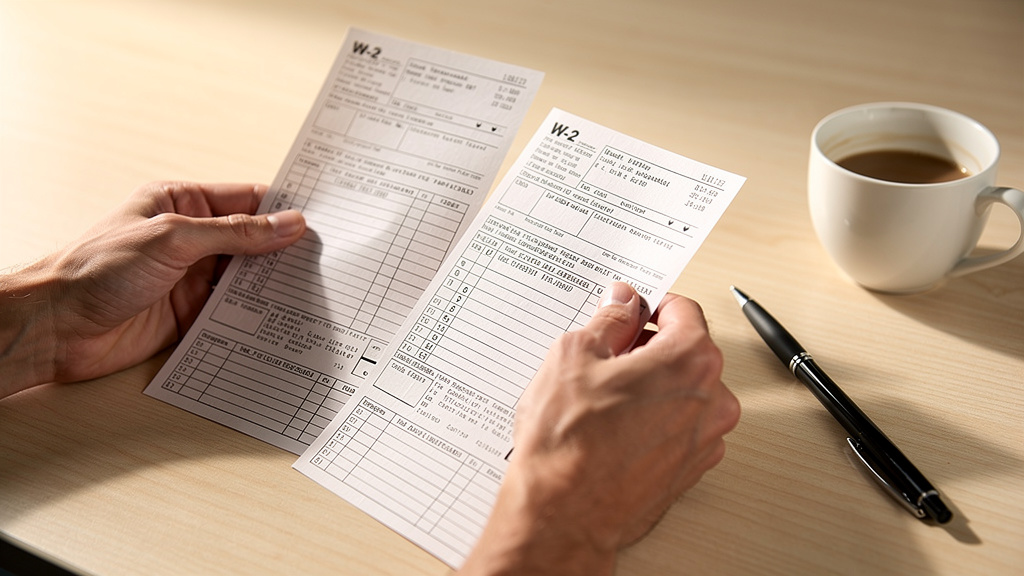
If you receive a regular paycheck from an employer, this is the simplest path. Most landlords consider W-2 income the gold standard because it's the easiest to verify.
How many pay stubs do you need?
Most landlords want the last 2–3 pay stubs. If you're paid weekly, they may ask for 4 to see a full month of income. If you're paid biweekly, 2–3 stubs covers about a month.
What landlords look for on your pay stubs
- Employer name — confirms where you work
- Gross pay — your income before taxes and deductions
- Net pay — what actually hits your bank account
- Pay period dates — shows consistency
- Year-to-date (YTD) earnings — shows cumulative income
- Your name and employee ID — matches your application
What if your pay recently changed?
If you got a raise, changed roles, or switched to a new pay schedule, include a short note or an updated offer letter. A raise is good news — just explain it so the landlord doesn't see inconsistent numbers and assume instability.
Employment verification letters
Some landlords (especially larger property management companies) will request an employment verification letter. This is a short letter from your HR department on company letterhead confirming your job title, start date, and salary. You can usually request this from HR within 1–2 business days.
Self-Employed, Freelancers, and Gig Workers

This is where most renters get stuck. If you drive for Uber, freelance as a designer, run a small business, or work multiple gigs, you don't get a neat pay stub from a single employer. But you still have proof — it just looks different.
The self-employed document stack
| Document | Why It Helps |
|---|---|
| Tax returns (2 years) | Most convincing — shows the IRS already verified your income |
| 1099 forms | Shows income from each client or platform |
| Bank statements (3 months) | Proves regular deposits and current cash flow |
| Profit & loss statement | Summarizes business income and expenses monthly |
| Client contracts or invoices | Shows ongoing work agreements and payment terms |
How to explain variable income
Include a one-paragraph note with your application. Keep it factual and specific:
A real example
Maria drives for rideshare and delivers groceries. Her monthly income ranges from $3,800 to $5,200. She applies for a $1,500/month apartment (3× requirement = $4,500/month).
Instead of panicking about the months she earned below $4,500, she submits: her last 6 months of bank statements, her most recent tax return showing $54,000 annual income, and a note explaining her 6-month average is $4,400 with upward trend. The landlord approves because the tax return proves the income is real, and the bank statements show current cash flow.
Starting a New Job: Offer Letters
If you're starting a new job and don't have pay stubs yet, an offer letter can substitute — but not all landlords accept it, and some will want additional documentation.
What a strong offer letter includes
- Employer name and contact information (on company letterhead)
- Your job title and start date
- Salary or hourly rate (annual salary or hourly + expected hours)
- Signature from HR or hiring manager
The catch with offer letters
An offer letter proves you will earn income, but not that you currently do. Some landlords will accept it alone; others will ask for:
- A larger security deposit to offset the risk
- Proof of savings to cover the first few months
- A cosigner or guarantor until you receive your first paychecks
Students and Non-Traditional Income

Students face a unique challenge: you may not have full-time income, but you still need to qualify for housing. Here's what works:
Documents students can use
| Income Source | Proof Document |
|---|---|
| Financial aid / student loans | Financial aid award letter from your school |
| Scholarships | Scholarship award notification letter |
| Graduate stipend / assistantship | Letter from your program office confirming stipend amount |
| Part-time job | Pay stubs from campus or off-campus employment |
| 529 plan or family support | Bank statements showing regular deposits; a signed support letter from a parent or guardian |
| Cosigner / guarantor | Cosigner's income documentation (pay stubs, tax returns) |
The reality is that many student renters need a cosigner. This is normal and expected — it's not a reflection on you. For tips on when and how to use a cosigner, see Renting With Bad Credit: Your Options.
---Automated Income Verification in 2026
This is the biggest change in rental applications over the last few years. In 2026, many landlords — especially at larger apartment complexes — don't review documents manually at all. Instead, they use automated income verification services.
How automated verification works
- During your application, you're asked to connect to a verification service (or provide your employer info)
- The service contacts your employer's payroll provider directly
- Your income and employment status are verified electronically — no documents needed from you
- The landlord receives a verified income report
Major verification services in 2026
| Service | How It Works | Best For |
|---|---|---|
| The Work Number (Equifax) | Connects to employer payroll systems directly | W-2 employees at large/mid-size companies |
| Incomed | Links to your bank account to verify deposits | Gig workers, freelancers, variable income |
| RentTrack | Combines income verification with rent payment reporting | Renters building credit history |
| TransUnion SmartMove | Income + credit + background in one report | Independent landlords wanting an all-in-one check |
Master Document Checklist
Before you apply, pull together your documents using this checklist. Having everything ready in advance prevents delays and follow-up requests.
Essential Documents (Almost Always Required)
- ☐ Last 2–3 pay stubs (or equivalent for your income type)
- ☐ Government-issued photo ID
- ☐ Completed rental application
- ☐ Application fee payment ($30–$75 typically)
Recommended Documents (Strengthens Your Application)
- ☐ 2–3 months of bank statements
- ☐ Employment verification letter
- ☐ Short income explanation note (especially for variable income)
- ☐ Reference letter from previous landlord
- ☐ Proof of savings (bank statement showing balance)
Income-Specific Documents
- ☐ Tax returns (self-employed, freelancers)
- ☐ 1099 forms (independent contractors)
- ☐ Offer letter (new hires)
- ☐ Financial aid / stipend letter (students)
- ☐ Social Security / pension statement (retirees)
→ For a complete application walkthrough, see the Rental Application Checklist.
---The 7 Most Common Proof-of-Income Mistakes
These are the issues that cause the most delays and denials. Avoid every one of them:
| Mistake | Why It's a Problem | The Fix |
|---|---|---|
| Submitting old pay stubs | Landlords want current income, not what you earned 6 months ago | Use only the most recent 2–3 pay stubs |
| Over-redacting bank statements | If you black out the deposit amounts, the statement is useless | Only redact non-essential spending; keep deposits visible |
| Using phone screenshots | Screenshots are easy to fake and often miss details | Download official PDF statements from your bank |
| Inconsistent numbers | Application says $5,000/month but pay stubs show $4,200 | Double-check every number before submitting |
| Blurry or incomplete scans | If the landlord can't read it, it doesn't count | Use a scanning app or download PDFs directly |
| No explanation for variable income | Landlord sees fluctuating deposits and assumes risk | Include a one-paragraph income summary note |
| Missing name or account details | Documents can't be verified if they're not linked to you | Make sure your name appears on every document |
Copy/Paste Income Explanation Template
Use this template when your income is variable, self-employed, or doesn't fit a standard pay stub. Customize the bracketed sections and keep it to one short paragraph.
Dear [Property Manager Name],
I am submitting my income documentation for the rental application at [Property Address]. My income type is [W-2 / self-employed / freelance / student / Social Security], and my average monthly income over the last [3/6/12] months is $[amount].
I have included the following documents: [list your documents — e.g., "last 3 pay stubs, 2 months of bank statements, and an employment verification letter from HR"].
If you need any additional information or verification, please don't hesitate to contact me at [phone] or [email].
Thank you,
[Your Full Name]
Source-of-Income Protections (2026)
In 2026, California, New York, New Jersey, Oregon, Washington, Washington D.C., and dozens of local jurisdictions prohibit landlords from discriminating based on the source of your income. This means a landlord cannot reject you because your income comes from housing vouchers, Social Security, disability benefits, veterans benefits, or alimony — as long as the total income meets their requirements.
This article is general information, not legal advice. Consult a qualified professional for advice specific to your situation.
---Frequently Asked Questions
What if I don't have pay stubs?
Use bank statements, tax returns, or an offer letter instead. If you're paid in cash, bank statements showing regular deposits can substitute. Ask the landlord what they accept — most are flexible if you can show consistent income through alternative documents.
Can I use bank statements alone as proof of income?
Yes, especially for self-employed renters, gig workers, and anyone paid in cash. Bank statements showing consistent deposits over 2–3 months are widely accepted. Just make sure your name and account details are visible so the statement can be verified.
Do landlords check gross or net income?
Almost always gross income (before taxes). This is why someone can "pass" the 3× income check but still struggle to afford rent — gross and net can differ by 25–35%. Your personal budget should always be based on net income. Read more about this gap in our Minimum Income to Rent guide.
What if I'm paid in cash?
Deposit cash regularly into your bank account. Bank statements showing consistent cash deposits create a verifiable income pattern. If possible, also keep a written log or receipts from your employer showing hours worked and compensation.
Can I use screenshots of my bank app instead of PDF statements?
Some landlords will accept screenshots, but official PDF statements are always better. Screenshots can be hard to verify, may miss important details, and some landlords will outright reject them. Download official statements from your bank's website — they're free and take 30 seconds.
How recent do my documents need to be?
Most landlords want documents from the last 30–60 days. Pay stubs older than 60 days may not reflect your current income. Tax returns are the exception — they're accepted from the prior year because they show annual verified income.
Should I include my savings as proof of income?
Savings don't replace income proof, but they strengthen your application as a backup. A landlord who sees you have 3–6 months of rent in savings is more likely to approve you even if your income is borderline. Include bank statements showing your balance as a supplement, not a substitute.
What if my income is below the landlord's requirement?
You have options: a cosigner or guarantor, a larger security deposit, proof of substantial savings, an excellent rental history with references, or a longer lease term. In 2026's softer rental market, many landlords are more willing to negotiate. See our How Much Rent Can I Afford? guide for realistic budgeting.
Can a landlord verify my income without my permission?
No. Income verification requires your written authorization, typically given when you sign the rental application. Automated verification services like The Work Number only access your data after you explicitly consent.
---Next Steps
📊 Check Your Budget
Proof of income gets you approved — but can you actually afford the rent? Use your take-home pay, not the gross number.
✅ Full Application Prep
Income is one piece. Credit, rental history, and documentation all matter. Use the complete checklist.
🔍 Understand the Full Picture
See everything landlords evaluate: income, credit, background, and more.
This guide is for general informational purposes only and does not constitute legal, financial, or tax advice. Rental requirements vary by property, market, and jurisdiction. Consult a qualified professional for advice specific to your situation.